Please register your VBOX Speed Sensor unit so that Racelogic can continue to provide you with notifications about the latest software releases and firmware upgrades for your Racelogic product and offer technical support.
Register your device here.
| Product Code | Quantity | Description |
|---|---|---|
| VBSS100-V5 | 1 | VBOX 100 Hz GPS Speed Sensor unit |
| RLACS283 / RLACS324 | 1 | Dual Band GNSS Antenna (includes 4 m removable cable) |
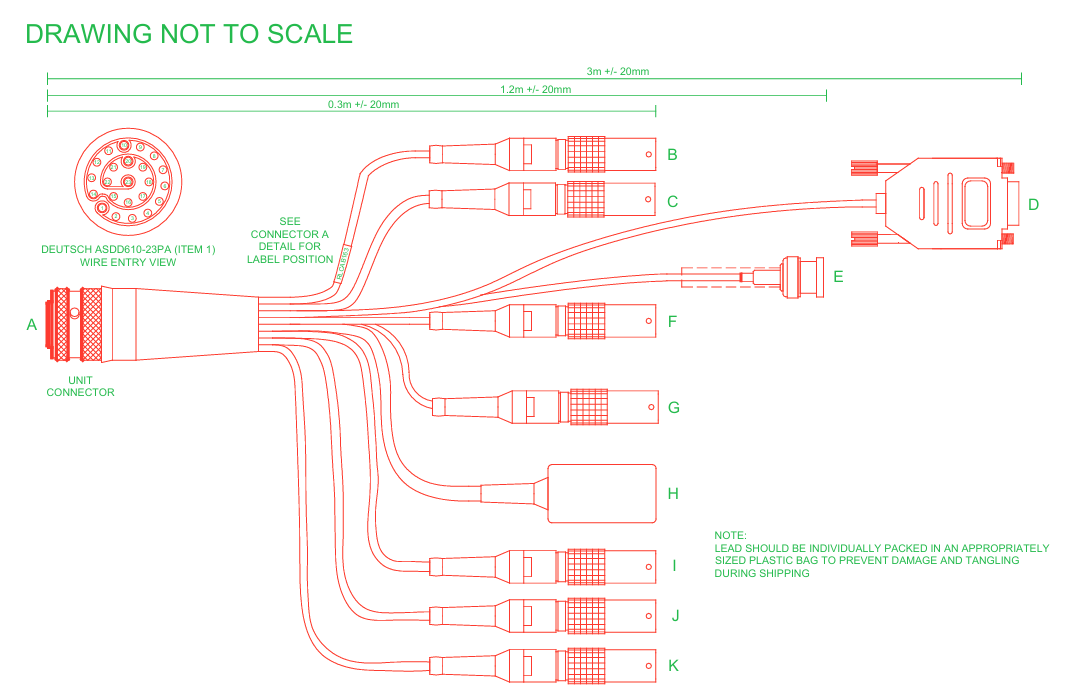
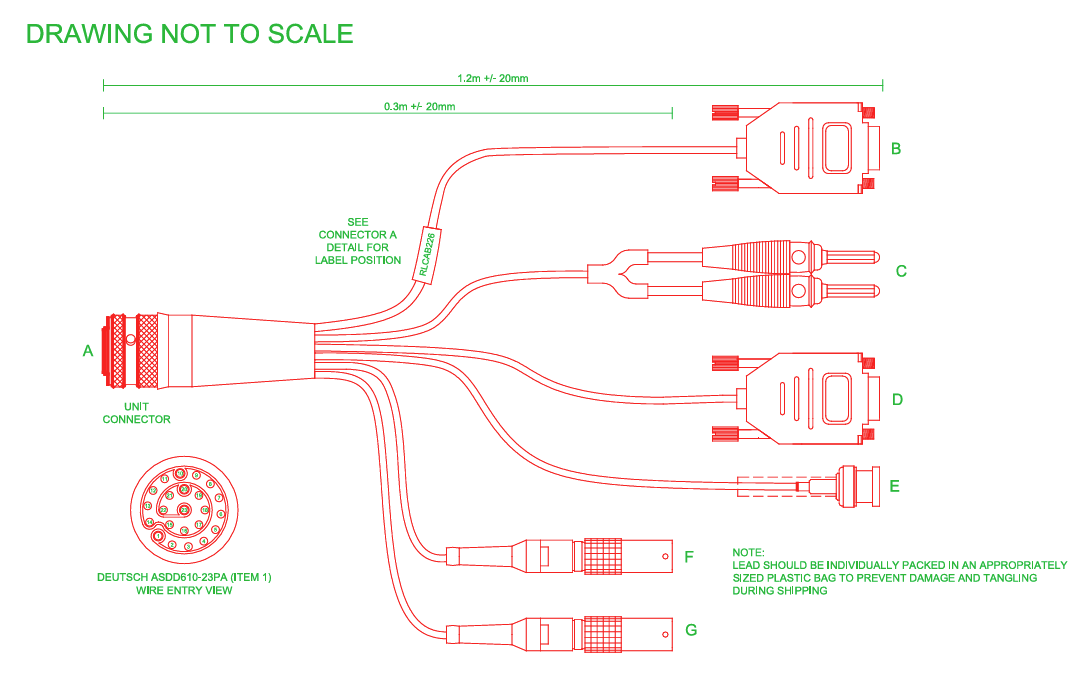
| RLCAB163 | 1 | Cable loom - Deutsch 23W ASDD - Multiple Connectors |
| RLCAB001 | 1 | Lemo 5W Plug - 9W Socket - 2 m (Serial Configuration) |
| RLACS106 | 1 | VBOX Plastic Carry Case |
| RLCAB010LE | 1 | Lemo 2W Plug - Cigar Plug - 2 m cable (Power) |
| RLCALUKAS | 1 | Certificate of Calibration |
Note: You may have to order additional cables separately.
VBOX 100 Hz Speed Sensor units are powered via the POWER IN lead or the CAN OUT + POWER lead on the supplied loom. You can use the RLCAB010LE cable to connect to a 12 V output point in a vehicle or you can use a battery pack.
IMPORTANT
- The maximum operating voltage input must not exceed 30 V DC. Failure to observe this could result in damage to the VBOX unit.
- The cable looms and unit connectors are colour coded. It is important that you use a loom with a colour marker that corresponds with the colour marker on the unit's connector. The VBOX 100 Hz GPS Speed Sensor (v5) has a yellow colour marker.
VBOX 25 Hz Speed Sensor units is powered via the POWER IN banana plugs. Alternatively, you can use the CAN OUT + POWER lead on the loom to pass power to the Speed Sensor from a third-party device. Contact Racelogic Support for further guidance.
IMPORTANT
- The maximum operating voltage input must not exceed 30 V DC. Failure to observe this could result in damage to the VBOX unit.
- The cable looms and unit connectors are colour coded. It is important that you use a loom with a colour marker that corresponds with the colour marker on the unit's connector. The VBOX 25 Hz GPS Speed Sensor (v2) has a yellow colour marker.
VBOX Speed Sensors have been designed to generate as little heat as possible and has a wide operating temperature range. It is, however, good practice to mount it in a position where it has sufficient airflow around the unit.